Best DBT Apps in 2026: DBT Coach, DBT-Mind, DBT Pal and More Compared
By Timo, founder and developer of DBT-Mind
Quick answer
The best DBT app depends on what you need. DBT Coach has the biggest content library and by far the most ratings. DBT Diary Card & Skills Coach is a one-time $4.99 purchase made by a licensed psychologist. DBT Pal is the quickest diary card, with entries stored on your device. DBT-Mind puts skills, diary card and journal, a crisis hub and AI crisis chat in one app on iOS and Android, in English, German and Spanish. Prices below: US App Store, October 2026.
General information about DBT skills. It does not replace therapy, and in an emergency contact your local emergency number or crisis line.
Apps cannot replace therapy, but between sessions they make DBT homework easier: logging a diary card, finding the right skill in a crisis, practicing a skill before you need it. This comparison is written by the team behind DBT-Mind, so we say that up front. We list where the other apps are stronger, and every fact comes from each app’s store listing as of October 2026.
Prices change by country and over time, so treat them as a snapshot and check the store before you buy.
What to look for in a DBT app
A diary card you will actually fill in
Speed matters more than features: a card that takes 30 seconds gets filled in every day, one that takes ten minutes does not.
Skills you can find in a crisis
When emotions are at a 9 out of 10, search and a dedicated crisis section matter more than the size of the library.
A way to share with your therapist
PDF export, an emailed summary or live sharing. Ask your therapist which format they prefer.
Clear privacy
Check where your entries are stored (on your device or on a server), what is sent to AI features, and whether the developer explains it in plain language. Read the privacy policy before you write anything sensitive.
A price model you understand
One-time purchase, free with a subscription, or a free tier with limits: know what stays free before you invest time entering data.
An app that is maintained
Check the “last updated” date in the store. DBT changes slowly, but phones and operating systems do not.
The four apps side by side
Four apps cover most of what people look for when they search for a DBT app. Here is how they compare on the basics.
| App | Price | Platforms | Standout features (from its listing) |
|---|---|---|---|
| DBT Coach | Free to download; subscription $11.99 per month or $59.99 per six months | iOS and Android | 100+ video lessons, 60+ animated skill guides, 1,000+ guided meditations, diary card with analytics, real-time sharing with a therapist, AI coach |
| DBT Diary Card & Skills Coach | $4.99 one-time purchase | iPhone, iPad, Mac (no Android version found) | Customizable diary card, skills reference and coaching, graphs, PDF export and weekly email to a therapist, password lock |
| DBT Pal | Free to download; $5.99 per month or $39.99 per year | iPhone, iPad, Mac (no Android version found) | Diary card in about 30 seconds, entries stored on your device, no account needed, AI coach, safety-plan builder, guided breathing and grounding |
| DBT-Mind | Free to download; Premium from $8.99 per month or $54.99 per year | iOS and Android | Skills library and learning paths, diary card and journal, crisis hub with SOS cards, guided audio and breathwork, chain analysis, daily planner, support notes, therapist portal, AI crisis chat (Premium) |
Sources: each app’s App Store and Google Play listing, read in October 2026. “No Android version found” means we did not find one on Google Play; check the store yourself.
DBT Coach: the biggest content library
DBT Coach, from Resiliens Inc., is the most established of the four, with by far the most ratings on the US App Store. Its listing highlights 100+ video lessons, 60+ animated skill guides, more than 1,000 guided meditations, a diary card with analytics, real-time sharing with a therapist and an AI coach. It is available in English plus 32 other languages.
Best for
People who want structured learning with video lessons and are happy to pay a subscription for it.
Limits
Full access is subscription-based, at $11.99 per month or $59.99 per six months.
DBT Diary Card & Skills Coach: the one-time purchase
Made by Durham DBT, Inc., this app’s listing says it was created by a licensed, DBT-trained psychologist. It combines a customizable diary card, a skills reference, skills coaching, graphs over time, PDF export and a weekly email to your therapist, plus a password lock, for a one-time $4.99 with no subscription.
Best for
IPhone users who want a straightforward diary card and reference without a subscription.
Limits
IPhone, iPad and Mac only (we found no Android version), English only, and its store listing shows the last update in October 2019.
DBT Pal: the fastest diary card
DBT Pal, by Benjamin Fox, is built around speed: its listing promises a diary card in about 30 seconds, rating urges and emotions from 0 to 5. Entries are stored on your device by default, no account is required, and iCloud backup is optional. It adds an AI DBT coach, weekly insights, a safety-plan builder with crisis resources, and guided breathing and grounding exercises.
Best for
People who want a quick daily check-in with data kept on their phone.
Limits
English only, iOS only (we found no Android version), and the free version limits custom urges and emotions to three. It is also the newest and least rated of the four.
DBT-Mind: one app for skills, tracking and crisis support
DBT-Mind, which we make, takes the complete-DBT-app route: a skills library with interactive worksheets and learning paths, a diary card and mood journal, guided audio and a breathwork studio, a crisis hub with a crisis thermometer, emergency plans and SOS cards, a chain analysis tool, a daily routine planner, custom skills, support notes from people you trust, PDF export and a therapist portal. It runs on iOS and Android in English, German and Spanish.
What is free: the app is free to download, and the core skills and crisis tools are free. Free accounts also get basic analytics, a couple of breathing presets, some audio exercises and a limited number of chain analyses each month. Premium (from $8.99 per month or $54.99 per year) unlocks the AI crisis chat, advanced analytics, PDF reports, the full breathwork studio, unlimited chain analysis and more learning paths.
Best for
People who want one app that covers skills, tracking and crisis support.
Limits
DBT-Mind is a newer app with far fewer ratings than DBT Coach, DBT Coach lists a bigger content library, and the AI crisis chat is a Premium feature.
Which one should you choose?
You want structured video learning
DBT Coach has the most content and the most ratings.
You want the cheapest start and use an iPhone
DBT Diary Card & Skills Coach costs $4.99 once, with no subscription.
You want the fastest daily check-in, with data kept on your phone
DBT Pal.
You want skills, tracking and crisis support in one app
DBT-Mind, including chain analysis, a daily planner and support notes, on iOS and Android.
You are working with a therapist
Ask which export or sharing format they prefer, then choose the app that offers it.
An app is a support tool, not treatment. If you are in danger or thinking about harming yourself, call 988 (US), 112 (EU) or your local crisis line.
Practice it in DBT-Mind
Try DBT-Mind free
DBT-Mind is free to download, so you can see whether it fits you before paying for anything.
- 1Download the app and choose English, German or Spanish.
- 2Pick a skill from the library or a guided exercise and try it once while you are calm.
- 3Set up your crisis plan and start your diary card or journal.
- 4Decide later whether Premium (AI crisis chat, PDF reports, the full breathwork studio) is worth it for you.

Frequently asked questions
- What is the best DBT app?
- It depends on what you need. DBT Coach has the biggest content library and the most ratings, DBT Diary Card & Skills Coach is a one-time $4.99 purchase, DBT Pal is the fastest diary card, and DBT-Mind tries to cover skills, tracking and crisis support in one app. For a head-to-head of the two biggest, see DBT-Mind vs DBT Coach.
- What is the best free DBT app?
- DBT Coach, DBT Pal and DBT-Mind are free to download with paid upgrades, and what stays free differs by app, so try the free version before you subscribe. DBT Diary Card & Skills Coach is not free: it is a one-time $4.99 purchase with no subscription.
- How much do DBT apps cost?
- As of October 2026 on the US App Store: DBT Coach from $11.99 per month, DBT Pal $5.99 per month or $39.99 per year, DBT-Mind Premium from $8.99 per month or $54.99 per year, and DBT Diary Card & Skills Coach $4.99 once. Prices differ by country and change over time.
- Is there a DBT app for BPD?
- All four apps are built around DBT, the best-researched treatment for borderline personality disorder, but none of them replaces therapy. See our guide to the DBT app for BPD for what to look for.
- Can a DBT app replace therapy?
- No. Apps support skills practice between sessions, but they cannot replace the therapeutic relationship or handle an acute crisis. If you are on a waitlist, an app is a good way to start practicing.
Keep learning
All guides
DBT-Mind vs DBT Coach: Which DBT App Fits You?
Two DBT apps, compared feature by feature: what each one costs, what stays free, and which kind of person each one suits.
Read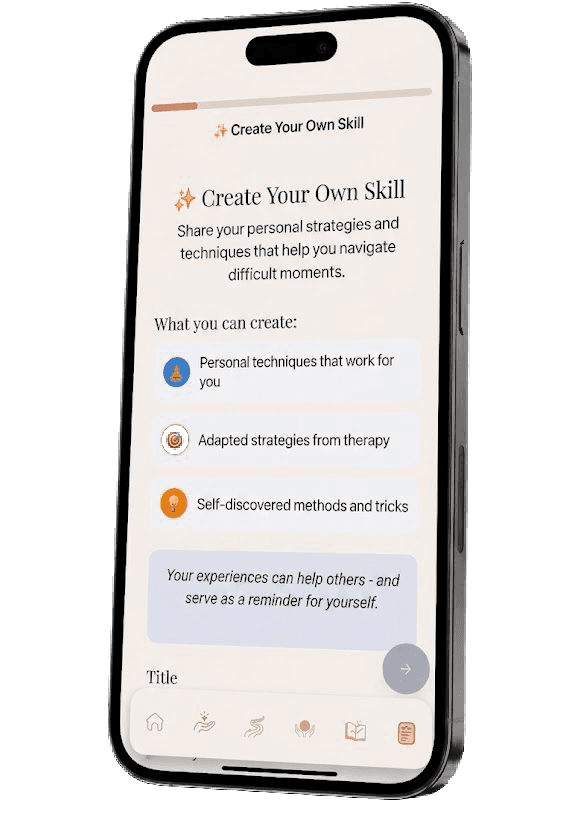
DBT Coach Alternatives: 4 DBT Apps for Different Needs
The right alternative depends on why you are looking: price, privacy, Android, a simpler diary card or more crisis support.
Read
The DBT App for BPD: How App-Based Skills Help With Borderline Personality Disorder
Why DBT is the gold-standard treatment for BPD, what an app can realistically help with, and how to use one between (or before) therapy sessions.
Read