The DBT App for BPD: How App-Based Skills Help With Borderline Personality Disorder
By Timo, founder and developer of DBT-Mind
Quick answer
DBT is the best-researched treatment for borderline personality disorder, and a good DBT app supports it in three ways: instant access to crisis skills during intense episodes, structured training in the skills that regulate emotions long-term, and daily tracking that reveals patterns you and your therapist can treat. An app does not replace therapy for BPD. It makes the hours between sessions survivable and productive.
General information about DBT skills. It does not replace therapy, and in an emergency contact your local emergency number or crisis line.
BPD involves emotions that hit faster, harder, and longer than most people experience, and the moments that matter most (2 am spirals, abandonment panic, rage that arrives in seconds) never happen during a therapy session. That is the gap an app fills: the skill you need, in your pocket, at the moment of intensity.
Why DBT specifically for BPD?
Dialectical Behavior Therapy was created by Marsha Linehan specifically for borderline personality disorder, and decades of clinical trials support it: reduced self-harm, fewer hospitalizations, and improved emotion regulation. Its premise fits BPD exactly: intense emotions are not a character flaw but a skills deficit that can be trained.
The four DBT modules map directly onto core BPD struggles: distress tolerance for crisis urges, emotion regulation for the rollercoaster, interpersonal effectiveness for unstable relationships, and mindfulness for the emptiness and identity confusion.
What to look for in a BPD app
A real crisis section
Not a meditation library: step-by-step crisis plans, emergency skills like TIPP, and something interactive for the moments when reading feels impossible.
The full skills curriculum
All four modules with worksheets, not a handful of breathing exercises with DBT branding.
A diary card
Daily tracking of emotions, urges, and skills: the backbone of actual DBT treatment (how a diary card works).
Therapist integration
Exportable reports, so the app strengthens your therapy instead of existing beside it.
A data policy you understand
BPD-related data is among the most sensitive health data there is. Read the app’s policy: where entries are stored, who can see them, and whether AI features send your text to an outside service.
A realistic picture: what the app does and doesn’t do
On a hard night, an app gives you a crisis plan you wrote when you were calm, a guided exercise that slows your body down, and a place to ride out an urge without acting on it. Over months, the diary card shows you (and your therapist) exactly which situations precede which spirals, which is where treatment gets traction.
What no app can do: provide the therapeutic relationship, handle acute suicidal crises, or deliver full DBT. If you are in danger, call 988 (US), 112 (EU), or your local crisis line. If you are on a DBT waitlist, an app is one of the best uses of that waiting time. You will arrive already speaking the language.
Practice it in DBT-Mind
How DBT-Mind supports people with BPD
DBT-Mind was built around the crisis-first reality of intense emotions. The crisis hub is one tap from anywhere, and everything works offline.
- 1Use the crisis thermometer to rate intensity, then follow your personal step-by-step crisis plan, written by you, for exactly this moment.
- 2Access emergency skills (TIPP, grounding, paced breathing) instantly, with guided audio when reading is too much.
- 3Chat with the AI crisis support for immediate, DBT-informed guidance while you reach for human help.
- 4Track emotions and urges daily in the journal, and, with Premium, export PDF reports so your therapist sees the week you actually had.

Frequently asked questions
- Can an app really help with borderline personality disorder?
- As a support tool, yes: app-based DBT skills training and diary tracking target the same mechanisms as the skills-group half of DBT. As a standalone treatment for BPD, no. The evidence base for BPD is for full DBT with a therapist, and an app works best alongside or while waiting for that.
- Is DBT-Mind free for BPD support?
- The core app is free to download and use, including skills and crisis tools. Premium unlocks the full library of guided audio exercises, AI crisis chat, and advanced features, but the essentials for getting started cost nothing.
- What DBT skills help most with BPD episodes?
- For acute episodes: TIPP and STOP (distress tolerance) act fastest. For the patterns underneath: opposite action and Check the Facts (emotion regulation), and DEAR MAN for the relationship conflicts that often trigger episodes.
Keep learning
All guides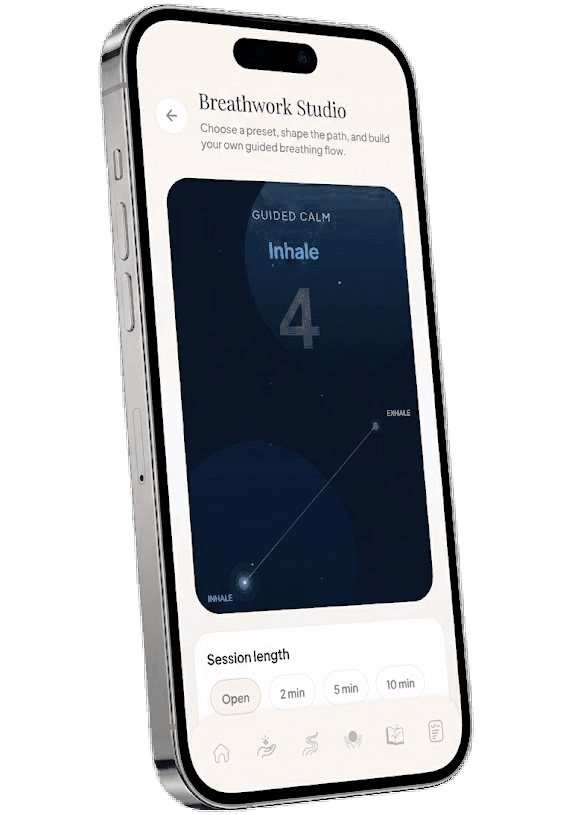
TIPP Skill: Calm Your Body Down in Minutes (DBT)
The fastest-acting DBT skill: four body-based techniques that lower overwhelming emotion in minutes, explained step by step.
Read
Best DBT Apps in 2026: DBT Coach, DBT-Mind, DBT Pal and More Compared
An honest side-by-side of four DBT apps: what each one costs, what it does best, where it falls short, and how to choose.
Read
Can You Do DBT on Your Own? A Realistic Guide to Self-Guided DBT
What self-guided DBT realistically can and cannot do, and how to structure learning DBT skills while waiting for (or instead of) therapy.
Read