Quick answer
Distress tolerance skills are DBT techniques for surviving intensely painful moments without doing something that makes them worse. The core crisis survival skills are TIPP (rapid body-based de-escalation), STOP (pausing before impulsive action), ACCEPTS (structured distraction), self-soothing through the senses, and radical acceptance. They are designed for short-term survival, not long-term fixes.
General information about DBT skills. It does not replace therapy, and in an emergency contact your local emergency number or crisis line.
Every crisis has a window: the minutes between the surge of emotion and the action you might regret (the message sent, the drink poured, the harm done). Distress tolerance skills exist to get you through that window. They do not solve the problem that caused the crisis; they make sure you are still standing, with the problem no bigger, when the wave passes.
Free printable PDF
Distress Tolerance Skills and Crisis Plan
STOP, TIPP, grounding, self-soothe and ACCEPTS ranked by speed, plus a crisis plan to fill in while calm.
- 5 crisis skills
- Which skill when
- My crisis plan
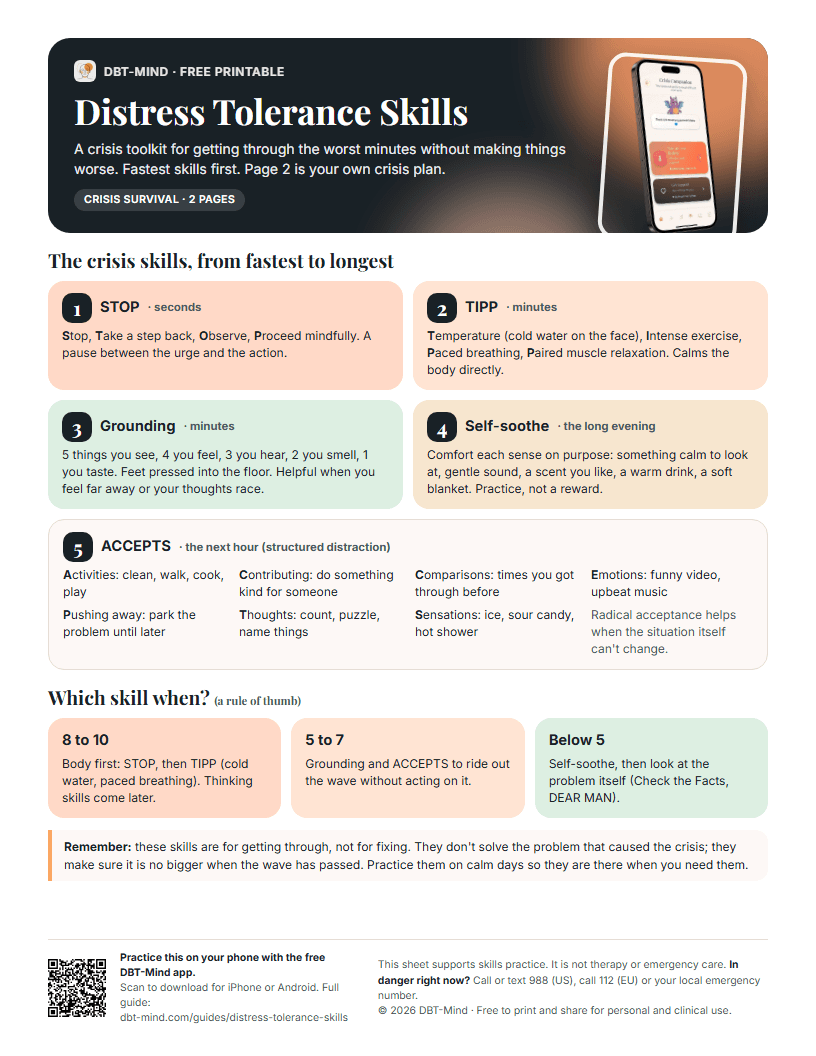
The crisis survival skills, ranked by speed
- 1
STOP: instant. Stop. Take a step back. Observe what is happening inside and around you. Proceed mindfully. STOP costs five seconds and is the difference between reacting and choosing.
- 2
TIPP: minutes. Temperature (cold water on the face), Intense exercise, Paced breathing, Paired muscle relaxation. When intensity is 8+, TIPP changes your physiology directly: use it before any skill that requires thinking.
- 3
Grounding: minutes. 5-4-3-2-1 senses, feet on the floor, naming objects in the room. Best when distress comes with dissociation or racing thoughts.
- 4
ACCEPTS: the next hour. Structured distraction: Activities, Contributing (do something for someone), Comparisons, opposite Emotions (funny video, upbeat music), Pushing away (shelve the problem deliberately), other Thoughts (count, puzzle), strong Sensations (ice, sour candy, hot shower).
- 5
Self-soothe: the long evening. Deliberately calm each sense: something beautiful to look at, calming sounds, a comforting scent, warm tea, a soft blanket. This is skill practice, not indulgence.
Build your crisis plan before you need it
In a real crisis, working memory collapses. You will not remember five acronyms. The single highest-value thing you can do while calm is write a crisis plan: a short, ordered list of what you personally will do when intensity spikes.
My early warning signs (what a rising crisis feels like in my body).
Step 1: my fastest skill (e.g., cold water + paced breathing).
Step 2: my best distraction for 30 minutes.
Step 3: people I can contact, in order, with their numbers.
Step 4: professional help. My therapist’s instructions, the crisis line (988 in the US), emergency services.
Keep the plan where the crisis happens: on your phone. A plan in a drawer at home does nothing for you at a party at midnight.
Practice it in DBT-Mind
The crisis hub in DBT-Mind
DBT-Mind puts the entire crisis toolkit behind one tap, built for the moment when scrolling and searching are beyond you.
- 1Rate your state on the crisis thermometer. It routes you to skills matched to your current intensity.
- 2Follow your personal step-by-step crisis plan, written in the app while calm and always available offline.
- 3Launch emergency skills instantly: guided TIPP, paced breathing with visual pacing, and grounding audio.
- 4Use the AI crisis chat for immediate DBT-informed support, and keep SOS cards and support notes from people who care about you one tap away.

Frequently asked questions
- What is the fastest distress tolerance skill?
- STOP is instant (a five-second pause), and TIPP’s cold-water technique is the fastest way to lower the emotion itself. The dive reflex slows your heart rate within about 30 seconds. Everything else works better after those two.
- What should be in a DBT crisis plan?
- Your personal warning signs, two or three ordered skill steps (fastest first), contacts you can reach out to, and professional/emergency resources with actual phone numbers. Write it while calm, keep it on your phone, and revise it after each crisis based on what worked.
- Are distress tolerance skills avoidance?
- No. Avoidance is pretending the problem doesn’t exist indefinitely; distress tolerance is deliberately postponing engagement until you are regulated enough to engage well. DBT is explicit that crisis survival skills are short-term tools, paired with emotion regulation and problem solving for the long term.
- Is there a free distress tolerance skills PDF?
- Yes. The free DBT-Mind distress tolerance PDF (two pages) ranks STOP, TIPP, grounding, self-soothe and ACCEPTS by how fast they work, and includes a crisis plan template to fill in while you are calm. It is free to print and share.
Keep learning
All guides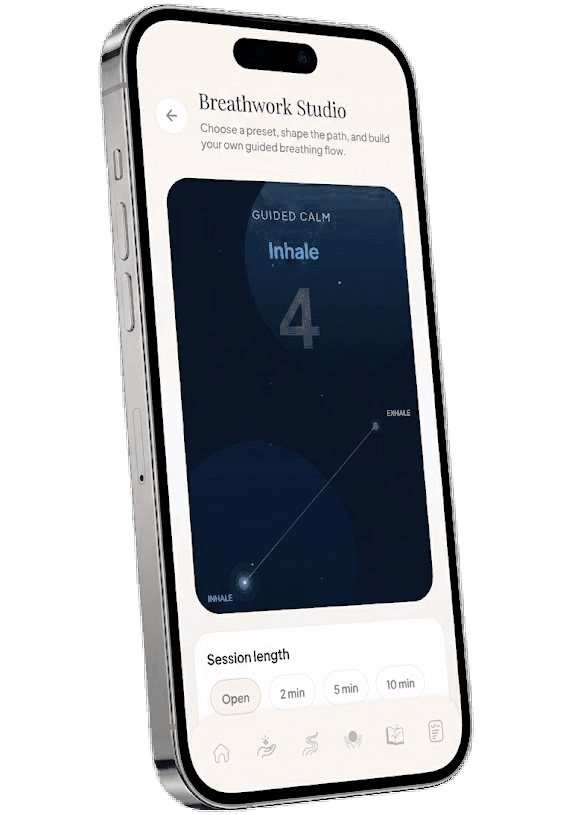
TIPP Skill: Calm Your Body Down in Minutes (DBT)
The fastest-acting DBT skill: four body-based techniques that lower overwhelming emotion in minutes, explained step by step.
Read
STOP Skill: How to Pause Before You React (DBT)
Stop, Take a step back, Observe, Proceed mindfully: the few seconds between a strong urge and what you do next, explained with an example.
Read
Radical Acceptance: 7 DBT Exercises for Pain You Can’t Change
What radical acceptance means (and doesn’t), seven exercises to practice it, examples from everyday life and statements you can use when you are stuck fighting reality.
Read