Grounding Techniques for Anxiety, Panic, and Dissociation
By Timo, founder and developer of DBT-Mind
Quick answer
Grounding techniques are exercises that pull your attention out of anxious thoughts, panic, or dissociation and anchor it in the present moment through your senses and body. The best-known is 5-4-3-2-1: name 5 things you can see, 4 you can feel, 3 you can hear, 2 you can smell, and 1 you can taste. Grounding works because attention is limited: a mind fully occupied with concrete sensory input has less bandwidth for the spiral.
General information about DBT skills. It does not replace therapy, and in an emergency contact your local emergency number or crisis line.
Anxiety lives in the future ("what if"), rumination lives in the past, and dissociation lives nowhere at all. Grounding is the counter-move for all three: deliberately loading your senses with the present until the present wins. It is a core companion to DBT mindfulness and distress tolerance skills, and it works best when you have practiced it calm, not discovered it mid-panic.
Sensory grounding: 5-4-3-2-1 done right
The classic exercise fails when people rush it as a checklist. The technique is in the dwelling, not the counting:
- 1
5 things you can SEE, but really look: the exact shade of the wall, the way light hits a glass. Describe each to yourself in a full sentence.
- 2
4 things you can FEEL: the chair against your back, your feet in your shoes, the temperature of the air, fabric on your skin.
- 3
3 things you can HEAR: near sounds, far sounds, the quietest sound you can detect.
- 4
2 things you can SMELL, or if nothing is available, two smells you like, imagined vividly.
- 5
1 thing you can TASTE: coffee residue, mint, or just the inside of your mouth.
Slow beats complete: three items truly noticed ground you more than fifteen rattled off.
Physical grounding: when thoughts are too loud for counting
Cold water or ice: hold an ice cube, run cold water over your wrists, splash your face. Strong sensation cuts through dissociation fastest.
Feet on the floor: stand, press your feet down hard, notice the ground pushing back. Rock heel to toe.
Muscle contrast: clench your fists for five seconds, release, and track the tingling. Repeat with shoulders and jaw.
Walking with attention: count steps, name the sensation of each footfall. Movement plus counting occupies both body and mind.
Mental grounding and when to use which
Mental anchors work well for rumination and mild anxiety, when your thinking is intrusive but functional: categories ("name every animal starting with S"), counting backward from 100 by 7s, or describing your surroundings as if to someone who cannot see them.
Rule of thumb: the further from the present you are, the more physical the technique should be. Mild worry → mental grounding. Racing panic → sensory 5-4-3-2-1. Numbness or unreality (dissociation) → strong physical sensation first, senses second. And if panic has your body in full alarm, do paced breathing or TIPP first: grounding lands better in a body that is not flooded with adrenaline.
Practice it in DBT-Mind
Guided grounding in DBT-Mind
In the moment, a voice guiding you beats a list you have to remember. DBT-Mind’s exercise library includes guided grounding audio for exactly this.
- 1Open the exercise library and start a guided grounding practice. Calm narration walks you through 5-4-3-2-1 at the right pace.
- 2Use the breath studio for paced breathing first when your body is in full alarm, then ground.
- 3Save your most effective techniques as custom exercises so your personal grounding sequence is one tap away.
- 4Practice a two-minute grounding daily via the routine planner. Rehearsal while calm is what makes it available mid-spiral.

Frequently asked questions
- What is the 5-4-3-2-1 grounding technique?
- A sensory exercise for anxiety and panic: name 5 things you can see, 4 you can feel, 3 you can hear, 2 you can smell, and 1 you can taste, slowly, dwelling on each. It anchors attention in the present so the anxious spiral loses bandwidth.
- Do grounding techniques work for dissociation?
- Yes, grounding is a first-line tool for dissociation, but lead with strong physical sensation (ice, cold water, feet pressed hard into the floor) rather than mental exercises, which tend to slide off when you feel unreal. Then move to the senses.
- How are grounding techniques related to DBT?
- Grounding overlaps with DBT’s mindfulness "what" skills (observe, describe; see the DBT skills list) and distress tolerance sensory skills. In practice they chain: TIPP or paced breathing to lower body alarm, grounding to return to the present, then a DBT skill for whatever triggered the spiral.
Keep learning
All guides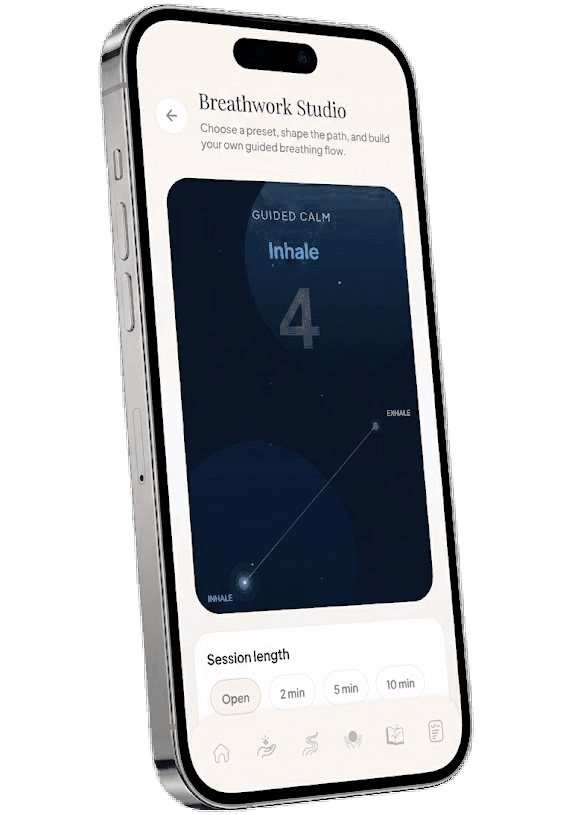
TIPP Skill: Calm Your Body Down in Minutes (DBT)
The fastest-acting DBT skill: four body-based techniques that lower overwhelming emotion in minutes, explained step by step.
Read
Distress Tolerance Skills: Surviving a Crisis Without Making It Worse
The DBT crisis survival toolkit (TIPP, STOP, ACCEPTS, self-soothing) and how to assemble them into a personal crisis plan.
Read
DBT Skills List: All 4 Modules Explained Simply
Every core DBT skill across the four modules, explained in plain language, with guidance on which module to start with.
Read