DBT for Anxiety: Which Skills Help in Which Anxious Moment
By Timo, founder and developer of DBT-Mind
Quick answer
DBT for anxiety means using DBT skills in the anxious moment itself: TIPP and slow breathing for a panic surge, STOP before you flee or snap, check the facts and mindfulness for a worry spiral, and cope ahead for dread before an event. In one small trial, a DBT skills group lowered anxiety more than a support group (Neacsiu et al., 2014). NIMH calls CBT the "gold standard" psychotherapy for generalized anxiety and panic disorder. If you feel unsafe, call 988 (US), 112 (EU) or your local crisis line.
General information about DBT skills. It does not replace therapy, and in an emergency contact your local emergency number or crisis line.
Anxiety does not feel like one thing. Sometimes it is a sudden surge: your heart pounds and you have to get out. Sometimes it is a loop of "what if" that runs all evening. Sometimes it is a heavy dread days before a doctor visit or a party. DBT has a skill for each of these moments, but not the same skill.
This guide matches the moment to the skill, gives you a short routine for a panic surge, and says plainly what the research does and does not show. It is written by the team behind DBT-Mind, an app for practicing DBT skills. It is self-help, not a treatment plan.
Which DBT skill for which anxious moment
Find the row that sounds like you right now, then start with the first step.
| Anxious moment | What it feels like | DBT skill | First step |
|---|---|---|---|
| Panic surge | Racing heart, fast breathing, "I have to get out" | TIPP: paced breathing, cold water | Breathe in for 4, out for 6 to 8 |
| Urge to flee or snap | You want to leave, cancel or say something sharp right now | STOP | Freeze for a few seconds before you act |
| Worry spiral | The same "what if" again and again | Check the facts, then mindfulness | Write down what you know for sure and what you are guessing |
| Dread before a known event | A heavy feeling days before a talk, a visit or a trip | Cope ahead | Pick one skill for the hardest moment and rehearse it |
| Avoiding something safe | You keep skipping a class, a call or a store because of fear | Opposite action | Take one small step toward it |
| Feeling unreal or far away | Sounds seem muffled, you feel like you are watching yourself | Grounding | Something cold in your hand, feet pressed into the floor |
Skills from Marsha Linehan, DBT Skills Training Manual, 2nd edition (Guilford Press, 2015), described in our own words. Matching a skill to a moment is our suggestion for self-help, not a study result. If you have panic attacks, an anxiety disorder or trauma, practice approaching what you fear with a therapist rather than alone.
The full steps are in each skill’s guide: the TIPP skill, the STOP skill, check the facts, cope ahead, opposite action and grounding techniques. Grounding has its own table of which technique fits panic, worry or dissociation.
A 3-minute routine for a panic surge
Practice this once or twice on a calm day, so your body knows it when panic hits.
- 1
Stop. Stay where you are if you can, and do not grab your phone or run for the door yet. The NHS advice for a panic attack is to stay where you are, if possible, and to breathe slowly and deeply (NHS, panic disorder).
- 2
Breathe out longer than in. In for 4, out for 6 to 8, for about two minutes. Count on your fingers if it helps. A 2018 review linked slow breathing to more activity in the calming part of the nervous system (Zaccaro et al., Frontiers in Human Neuroscience).
- 3
Add cold. If breathing alone is not enough, hold something cold against your eyes and cheeks, or splash cold water on your face. Cold water on the face during a held breath slows the heart (StatPearls, "Physiology, Diving Reflex"). If you have a heart condition, ask your doctor first.
- 4
Name it. Say to yourself: "This is a panic surge. It feels awful. I have gotten through this before." Many people find that naming it makes the surge feel less like "something is wrong with me".
- 5
Choose one next step. Look around and name five things you can see, or take one small action, such as a sip of water. Then decide whether you stay or leave, on purpose.
If you want a guide for the breathing step, the DBT-Mind app has two guided breathing patterns that are free (Guided Calm and Box) and a free TIPP worksheet. The other breathing presets come with Premium (called Plus in the app). Other apps pace breathing too; our box breathing app comparison shows what each one does for free.
Skills for worry and dread
Worry and dread move slower than panic, so you have time for thinking skills.
Check the facts
Ask: what actually happened? What am I adding? How likely is the outcome I fear, and could I cope if it happened? Worry often treats a guess as a fact.
Notice the thought as a thought
The DBT mindfulness skills observe and describe let you say "I am having the thought that I will fail" instead of "I will fail". See DBT mindfulness skills for how to practice.
Cope ahead
When the worry is about a real event, use it: plan your skills for the hardest part and rehearse them in your head while you are calm.
Set a worry time
Many people find it helps to write worries down and look at them at a set time later, instead of all day. This is a common self-help idea, not a DBT skill.
What the research says
DBT was built for intense emotions
Marsha Linehan developed DBT for people with very strong emotions. Its skills are taught in four modules: mindfulness, distress tolerance, emotion regulation and interpersonal effectiveness (Linehan, DBT Skills Training Manual, 2nd edition, 2015). It was not built as an anxiety treatment.
One small anxiety trial
A pilot trial randomized 44 adults with anxiety and/or depression and strong emotion dysregulation to 16 weeks of a DBT skills group or an activities-based support group. The DBT group had larger drops in emotion dysregulation and anxiety, but not in depression (Neacsiu, Eberle, Kramer, Wiesmann and Linehan, Behaviour Research and Therapy, 2014).
What that trial does not show
It was small and used a skills group. It did not test learning the skills alone from a website, a book or an app, and it did not compare DBT with CBT.
The usual therapy for anxiety
For generalized anxiety and panic disorder, the US National Institute of Mental Health calls CBT the "gold standard" psychotherapy, and describes exposure therapy as a common CBT method for panic (NIMH brochures on generalized anxiety disorder and panic disorder).
When DBT skills are not enough
Anxiety runs your days
If you skip work, school or plans because of anxiety, see a doctor or therapist. Talking therapy based on CBT and medicine are the main treatments for panic disorder (NHS). DBT skills can sit next to that, not replace it.
Panic attacks keep coming
See a doctor if you have been having symptoms of panic disorder (NHS). They can check for other causes and talk about treatment.
You calm down with alcohol or pills
If that is your main way through anxious moments, tell a doctor. There is help for that too.
You think about hurting yourself
Do not wait for a skill to work. Call 988 (US), 112 (EU) or your local crisis line.
Therapy is hard to get
See free and low-cost DBT options and how to practice DBT on your own while you wait.
Practice it in DBT-Mind
Practicing anxiety skills with DBT-Mind
DBT-Mind is a free DBT app for iOS and Android with a skills library, a journal and a crisis hub. It has no anxiety program, but these features fit the skills above. Each step says whether it is free.
- 1Open the Breathwork Studio for paced breathing. Guided Calm (in for 4, out for 6) and Box are free; 4-7-8 and the other presets come with Premium.
- 2Start the TIPP Worksheet in the Worksheets tab. It is the one free worksheet; the other four come with Premium.
- 3Play the guided "5-4-3-2-1 senses" audio when you feel far away. It is one of three guided audio exercises that are free.
- 4In the free Emergency tab, the Crisis Companion asks how intense your distress is and shows a short support plan. Mark the skills that help you as emergency skills (free) so they show up there.

Frequently asked questions
- Is DBT good for anxiety?
- DBT skills can help with anxious moments, and one small pilot trial found that a 16-week DBT skills group lowered anxiety and emotion dysregulation more than a support group (Neacsiu et al., 2014). The evidence is still thin. For generalized anxiety and panic disorder, NIMH calls CBT the "gold standard" psychotherapy, so DBT skills are best seen as an add-on.
- Which DBT skill should I use for a panic attack?
- Start with the TIPP skill: breathe out longer than you breathe in, and add cold water on your face if you need more. The NHS advice for a panic attack is to breathe slowly and deeply. If you have a heart condition, ask a doctor before using cold water. If you feel unsafe, call 988 (US), 112 (EU) or your local crisis line.
- Is DBT or CBT better for anxiety?
- NIMH says CBT "has been well studied" and calls it the "gold standard" psychotherapy for generalized anxiety and panic disorder. DBT was built for very intense emotions in general (Linehan, 2015). You can use DBT skills for hard moments while you are in CBT; ask your therapist how they fit together.
- Can I use DBT skills for anxiety on my own?
- You can practice skills such as paced breathing, STOP and check the facts on your own, and many people do. The trial on DBT for anxiety used a skills group, so it does not show how well self-study works. If anxiety keeps you from daily life, see a doctor or therapist.
- Are there DBT worksheets for anxiety?
- Yes. The TIPP and STOP guides each have a free one-page worksheet (PDF), and the cope ahead guide has a free plan for an event you dread. All of them are in our free DBT worksheets collection, free to print and share.
Keep learning
All guides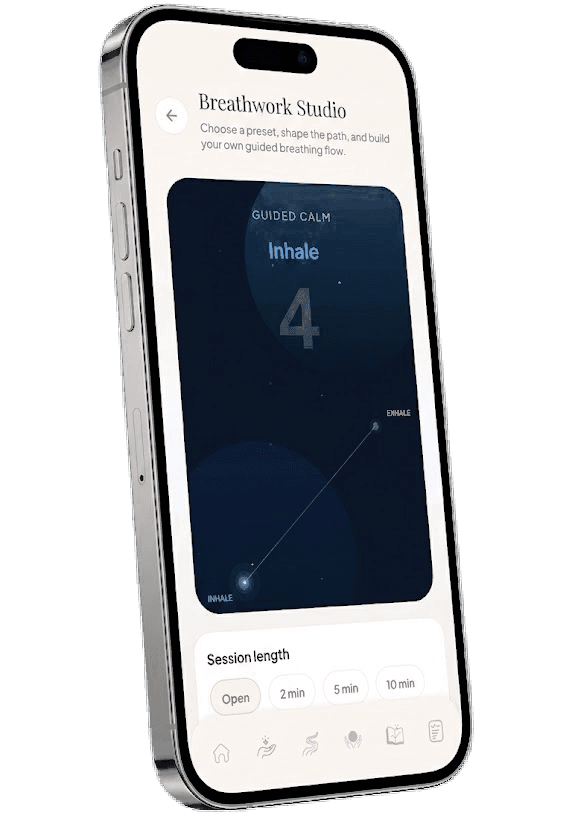
TIPP Skill: Calm Your Body Down in Minutes (DBT)
The fastest-acting DBT skill: four body-based techniques that lower overwhelming emotion in minutes, explained step by step.
Read
Grounding Techniques for Anxiety, Panic, and Dissociation
Which grounding technique fits anxiety, panic, dissociation or rumination, plus 5-4-3-2-1 step by step and a one-week practice plan.
Read
Check the Facts (DBT): 6 Steps to Test If an Emotion Fits
The six questions of the DBT skill Check the Facts, worked examples, and what to do next when your emotion fits the facts and when it does not.
ReadBox Breathing App: Free and Paid Options Compared
Box breathing apps sorted by what you need: a quick timer, vibration cues, lessons on breathing, or breathing next to DBT skills, with what each one costs.
Read