IMPROVE the Moment: The DBT Skill, Letter by Letter
By Timo, founder and developer of DBT-Mind
Quick answer
IMPROVE the moment is a DBT distress tolerance skill for making a painful moment easier to bear when you cannot change the situation right now. The letters stand for Imagery, Meaning, Prayer, Relaxing actions, One thing in the moment, Vacation and Encouragement (Linehan, DBT Skills Training Handouts and Worksheets, 2015). You choose the one that fits and use it for a few minutes. The IMPROVE skill does not solve the problem. It is for getting through the moment without making things worse.
General information about DBT skills. It does not replace therapy, and in an emergency contact your local emergency number or crisis line.
The worst of it is over. You did not send the text, you did not do the thing. But it is 8 pm, the evening is long, and the pain is still sitting there. IMPROVE the moment is for this part: not the peak, but the hours after it.
It is one of six crisis survival skills in Marsha Linehan’s DBT Skills Training Handouts and Worksheets (2nd edition, Guilford Press, 2015). Below: the seven letters, examples you can do in the next ten minutes, a table for picking a letter, and the limits. It is written by the team behind DBT-Mind, an app for practicing DBT skills.
What IMPROVE stands for
Seven letters, seven options. You do not work through them in order. You pick the one that fits tonight.
| Letter | What it means | One example |
|---|---|---|
| I: Imagery | Picture a scene that feels calm or safe | A cabin in the rain: the sound on the roof, the smell of wood |
| M: Meaning | Find something in the pain that matters to you | "I am staying sober tonight because my kids need me at breakfast." |
| P: Prayer | Open up to something larger than you, or to your own wise mind, and ask for strength | A prayer you know, or just "Help me get through the next hour." |
| R: Relaxing actions | Do something that loosens your body | Roll your shoulders, rub your neck, breathe out slowly |
| O: One thing in the moment | Give your whole attention to what you are doing right now | Drink a glass of water and notice only that |
| V: Vacation | Take a short, planned break from demands | Half an hour on the balcony with a magazine, phone inside |
| E: Encouragement | Talk to yourself the way a good coach would | "I have gotten through worse nights than this one." |
Letters and their order: Distress Tolerance Handout 9 ("Improving the Moment") in Marsha Linehan, DBT Skills Training Handouts and Worksheets, 2nd edition (Guilford Press, 2015). The handout words V as "a brief vacation" and E as "self-encouragement and rethinking the situation". Descriptions and examples are our own.
Each letter with examples
Every letter has a bigger and a very small version. On a night with no energy, the small one counts.
I: Imagery
Close your eyes and build one scene with all your senses. It can be a walk you know by heart, taken step by step. Linehan’s handout also suggests a room inside yourself that you furnish the way you like and whose door you can lock. Small version: look at one photo on your phone for a full minute and imagine standing there.
M: Meaning
This is not "everything happens for a reason". It is asking what the pain says about what matters to you, or what getting through it is for. "It hurts this much because the friendship was real." "I am doing this so my daughter grows up with a steadier parent." Small version: finish the sentence "Getting through tonight matters because". If nothing comes, leave this letter for now.
P: Prayer
You do not have to be religious. In Linehan’s handout, this letter means opening your heart to a supreme being, God or your own wise mind, and asking for strength to bear the pain. If you pray, pray your way. If you do not, say it in your own words, out loud or on paper: "I do not know how to do this. I am asking for the strength to get through the next hour." Small version: one sentence. "Help me bear this."
R: Relaxing actions
Anything that loosens your body. A hot shower, slow stretching on the floor, rubbing your neck and scalp. Small version: drop your shoulders and breathe out more slowly than you breathe in, five times.
O: One thing in the moment
Take something you are doing anyway and do only that. Brush your teeth and feel each tooth. Make tea and watch the water change color. When your mind runs ahead to tomorrow, bring it back to your hands. This is close to one-mindfully, one of the DBT mindfulness skills.
V: Vacation
A short break that you choose and that has an end. Not a week away. Some of Linehan’s own examples are this small: get into bed and pull the covers over your head, or take a one-hour breather from hard work. Two more: 20 minutes on a park bench without your phone, or a bath with the door locked. Decide when it ends before you start.
E: Encouragement
Say to yourself what you would say to a friend in the same spot. "This is hard and I am still here." "I do not have to fix my life tonight. I only have to get to bedtime." Small version: write one such sentence on a sticky note for the mirror. The handout pairs this letter with rethinking the situation. If you want a structured way to test a painful thought, that is what Check the Facts is for.
For Relaxing actions, the Guided Calm breathing preset in the DBT-Mind app paces your breath in for 4 and out for 6, and the 3-minute mindfulness audio fits "one thing in the moment". Both are free.
Which letter for which moment
If choosing feels like too much, start from the situation.
| The moment | Letter to try | What it looks like |
|---|---|---|
| Waiting for news you cannot speed up | One thing in the moment | The call comes when it comes. Until then: this dish, this email, this step. |
| After a fight, and nobody is answering | Encouragement, then Relaxing actions | "This can wait until tomorrow, and so can I." Then a hot shower. |
| A lonely Sunday night | Meaning or Imagery | Ask what the loneliness says you care about. Or visit, in detail, a place where you felt at home. |
| A pain flare or a sick day | Relaxing actions and Imagery | Warmth, slow breaths out, and one scene to rest your mind in. |
| Awake at 2 am with circling thoughts | One thing in the moment | Lights off. Attention on the weight of the blanket and on each breath out. |
| Shame after a mistake | Encouragement or Prayer | "I made a mistake. I am not the mistake." Or ask, in your own words, for the strength to face it. |
| Weeks of pressure without a break | Vacation | One planned hour off, written in the calendar, with an end time. |
These pairings are our suggestions, not rules and not study results. Linehan’s handout lists the seven options without ranking them. If one letter does nothing for you tonight, try another.
IMPROVE, ACCEPTS or self-soothe?
All three are crisis survival skills in Linehan’s handouts, and all three are for a moment you cannot fix right away. They differ in where your attention goes.
ACCEPTS: away from the pain
Seven kinds of distraction, such as an activity, helping someone or a strong sensation, to turn your attention somewhere else for a while.
Self-soothe: into the senses
Comfort for the body through something pleasant to see, hear, smell, taste or touch.
IMPROVE: inside the moment
You stay where you are and change how the moment feels, with a picture, a meaning, a short break or a kind sentence.
The distress tolerance skills guide has the ACCEPTS table, self-soothe ideas for each sense and a crisis plan that puts them together.
When IMPROVE is not enough
Your emotion is at a 9 or 10
Start with the STOP skill so you do not act, then the TIPP skill to bring your body down. IMPROVE comes after that.
You feel unreal or far away
Begin with grounding techniques, which point your attention at the room around you, and keep your eyes open.
The pain is a fact that stays
IMPROVE is for a moment. A loss, a diagnosis or a breakup is not a moment. For that, radical acceptance is the skill.
You can solve the problem
Linehan’s handouts say crisis survival skills are not for everyday problems or for solving all your life problems (Distress Tolerance Handout 3). If you can fix it tonight, fix it.
It starts to feel like pretending
None of the letters asks you to act as if things were fine. For Meaning and Encouragement, use only sentences you believe.
If you are thinking about hurting yourself or do not feel safe, call 988 (US), 112 (EU) or your local crisis line.
Practice it in DBT-Mind
Practicing IMPROVE with DBT-Mind
DBT-Mind is a free DBT app for iOS and Android. It has no IMPROVE worksheet, but the features below fit three of the letters, and each one named here is free.
- 1Relaxing actions: open the Breathwork Studio and start Guided Calm (in for 4, out for 6) or Box breathing. These two presets are free. The other presets and custom routines come with Premium (called Plus in the app).
- 2One thing in the moment: play the 3-minute mindfulness audio. It is one of three guided audio exercises that are free, next to 5-4-3-2-1 senses and mindful eating. The other audio exercises come with Premium.
- 3Encouragement: write your own sentences on an Emergency Card and pin it. You find your cards in the SOS sheet, and Emergency Cards are free.
- 4Save the letters that help you as your own custom skill and mark it as an emergency skill, so it shows up in the Emergency tab and the SOS sheet. Custom skills and emergency skills are free.

Frequently asked questions
- What does IMPROVE stand for in DBT?
- Imagery, Meaning, Prayer, Relaxing actions, One thing in the moment, Vacation and Encouragement. The full name is IMPROVE the moment. It is one of the crisis survival skills in the distress tolerance module (Linehan, DBT Skills Training Handouts and Worksheets, 2015).
- What is the difference between ACCEPTS and IMPROVE?
- Both are DBT crisis survival skills. ACCEPTS turns your attention away from the pain with distraction. IMPROVE stays in the moment and changes how it feels, for example with a calming image, a meaning or a short break. One way to combine them: ACCEPTS while the urge is high, IMPROVE for the long stretch after.
- Do I have to pray to use IMPROVE?
- No. In Linehan’s handout the P includes opening your heart to your own wise mind, not only to God or a supreme being. A non-religious version is to ask, in your own words, for the strength to bear this moment. You can also skip the letter and use the other six.
- What does Vacation mean in IMPROVE?
- A brief, planned break from demands, not a long trip. Linehan’s examples include getting into bed with the covers over your head and taking a one-hour breather from hard work. Set an end time before you start.
- When should I use IMPROVE the moment?
- When a painful situation cannot be changed right now and you need to get through the next minutes or hours without making it worse. If your emotion is at a 9 or 10, use STOP and TIPP first. If the pain is a lasting fact, such as a loss, radical acceptance fits better.
Keep learning
All guides
Distress Tolerance Skills: Surviving a Crisis Without Making It Worse
The DBT crisis survival toolkit (TIPP, STOP, ACCEPTS, self-soothing) and how to assemble them into a personal crisis plan.
Read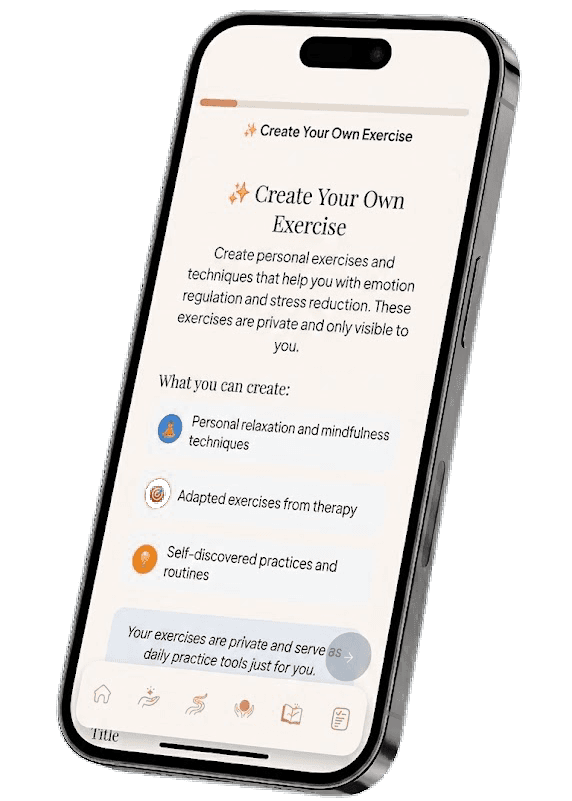
Radical Acceptance: 7 DBT Exercises for Pain You Can’t Change
What radical acceptance means (and doesn’t), seven exercises to practice it, examples from everyday life and statements you can use when you are stuck fighting reality.
Read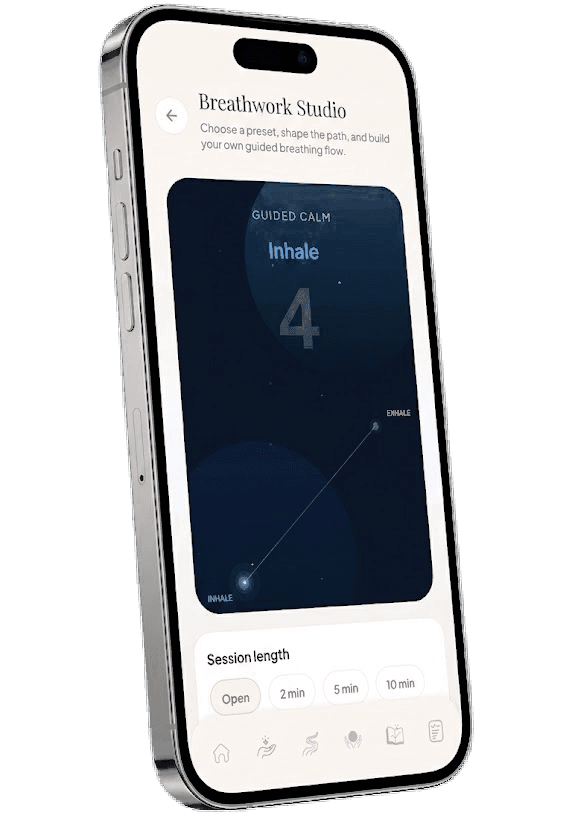
TIPP Skill: Calm Your Body Down in Minutes (DBT)
The fastest-acting DBT skill: four body-based techniques that lower overwhelming emotion in minutes, explained step by step.
Read